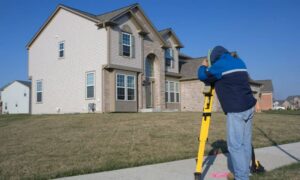
Plenty of homes get their water from a well that serves two houses. It works fine day to day. It gets harder when you try to finance one of those homes. Your lender and title company will want to know where the well sits, how water reaches the house and what gives you the right to keep using it. A mortgage survey can answer the physical part of those questions. Recorded documents answer the legal part. You need both pieces to line up before closing.
Confirm Which Property Actually Contains the Shared Well
The first fact to settle is which lot holds the well. Sellers often describe it loosely, like “the well by the stone wall” or “the one we share with next door.” That isn’t enough for a lender. A survey can show the wellhead in relation to the lot lines, so everyone knows whose land it’s on.
This matters most when the well sits close to a line. A few feet can decide whether the well is on your lot or the neighbor’s. Connecticut’s survey standards require the map to state what type of survey it is and its purpose. Some mortgage surveys show where buildings and features sit compared to the lot lines without giving a full opinion on where the lines are. If the well is near a line, ask your surveyor whether a boundary survey makes more sense for your situation.
Trace the Water Line Across Property Boundaries
The well is only half the picture. A buried pipe carries water from the well to each house, and it may cross a yard, a driveway or a third lot. Some shared systems also have one pressure tank in one basement feeding both homes. The pump runs on electricity, and that power often comes from just one of the houses.
Surveyors can locate what they can see, such as the well cap, valve boxes or a marked trench. Buried pipes are harder. The surveyor may rely on utility marking, visible clues or information from the owners. Ask how the line was located and whether the map labels it as approximate. That note tells your lender and attorney how much weight to give the line’s position.
Match Shared-Well Access With Recorded Property Rights
Your right to use a shared well comes from recorded documents, not from the survey. That right might sit in a deed, an easement or a separate shared well agreement. In Connecticut, land records are kept by the town clerk in the town where the property is located. Your title search should turn up anything recorded there.
The next step is comparing those records to the survey. A good shared well agreement usually covers a few practical points:
- Where the well and water line are allowed to be
- Who can enter the other lot to repair or replace equipment
- How the owners split repair, electric and replacement costs
- What happens if the well fails or runs dry
- Whether the agreement passes to future owners
If the agreement describes the well in one place and the survey shows it somewhere else, that gap needs an answer before closing.
Flag Boundary Conflicts Before They Complicate the Mortgage
Some shared-well problems only show up once the survey and records sit side by side. The well may be on the neighbor’s lot with nothing recorded giving you the right to use it. The water line may cross a third lot whose owner never signed the agreement. An older easement may describe the original well, while a newer replacement well sits in a different spot.
Other conflicts come from later changes. A neighbor may have paved over the line, built a shed near the wellhead or put up a fence that blocks access. A mortgage survey can reveal these conditions. Your title company may then list them as exceptions, and your lender may ask for a fix. Fixes often mean a new or updated agreement that both owners sign and record. That takes time, so flag problems as early as you can.
Coordinate Survey and Title Records Before Closing
Order the survey early. Give your surveyor a copy of the title commitment and any shared well agreement you have. That way the surveyor can show recorded easement areas and note where they match or don’t match what’s on the ground.
Ask your lender up front what kind of survey they accept. Requirements differ between lenders and loan types. Once the survey is done, send it to your title company and your attorney. In Connecticut, attorneys commonly handle home closings, and they’re the right people to read the agreement and explain your rights. Some lenders also ask for a water quality test on private wells. That test is separate from the survey, so check whether your lender needs one and schedule it too.
Frequently Asked Questions
Does a mortgage survey show who owns a shared well?
No. The survey shows where the well and related features sit on the ground. Ownership and use rights come from deeds, easements and agreements in the land records. Your attorney and title company read those documents to answer the ownership question.
What if the shared well is entirely on the neighbor’s property?
Then your right to use it depends fully on what’s recorded. You’ll want written, recorded permission to draw water, reach the well and make repairs. Without it, the lender and title company may raise concerns before they’ll move forward.
Can two homes share a well without sharing the same property line?
Yes. The lots don’t have to touch the well’s lot directly. A pipe can run across another parcel to reach a home farther away. In that setup, every lot the pipe crosses may need to be covered by a recorded right.